The air in a commercial woodshop has a specific, heavy weight to it. It smells intensely like roasted pecans and sharp steel, layered with decades of fine sawdust that has settled deep into the pores of the concrete floor. When you walk into one of these cavernous manufacturing spaces, you aren’t just crossing a threshold; you are entering a hidden micro-economy that operates entirely unseen by the weekend hardware store crowd.
Big box retailers and commercial lumberyards have trained you to accept this financial sting without question. You push a squeaky cart down an aisle bathed in harsh fluorescent light, run your hand over a pale, warped piece of construction pine, note the shocking sticker price, and assume that dark, dense, chocolate-toned domestic hardwoods belong strictly in the realm of luxury commissions. You walk away convinced that beautiful, historically significant material is simply out of reach for a normal household budget.
But there is a silent arbitrage happening right under your nose in industrial parks across the country. While global supply chains panic, shipping costs soar, and retail markups hit historic highs, an entirely different transaction happens every Friday afternoon behind unmarked loading docks. You just need to know which heavy industrial door to knock on, and more importantly, how to ask the foreman for the scraps.
The Waste-Stream Arbitrage
Think of a high-end cabinetmaker like a master butcher. They buy massive, flawless slabs of domestic timber to carve out long, uninterrupted kitchen runs and seamless architectural panels. But trees do not grow in perfect rectangles, and commercial floor managers treat off-cuts as liability because they take up valuable square footage in a shop where space equals money.
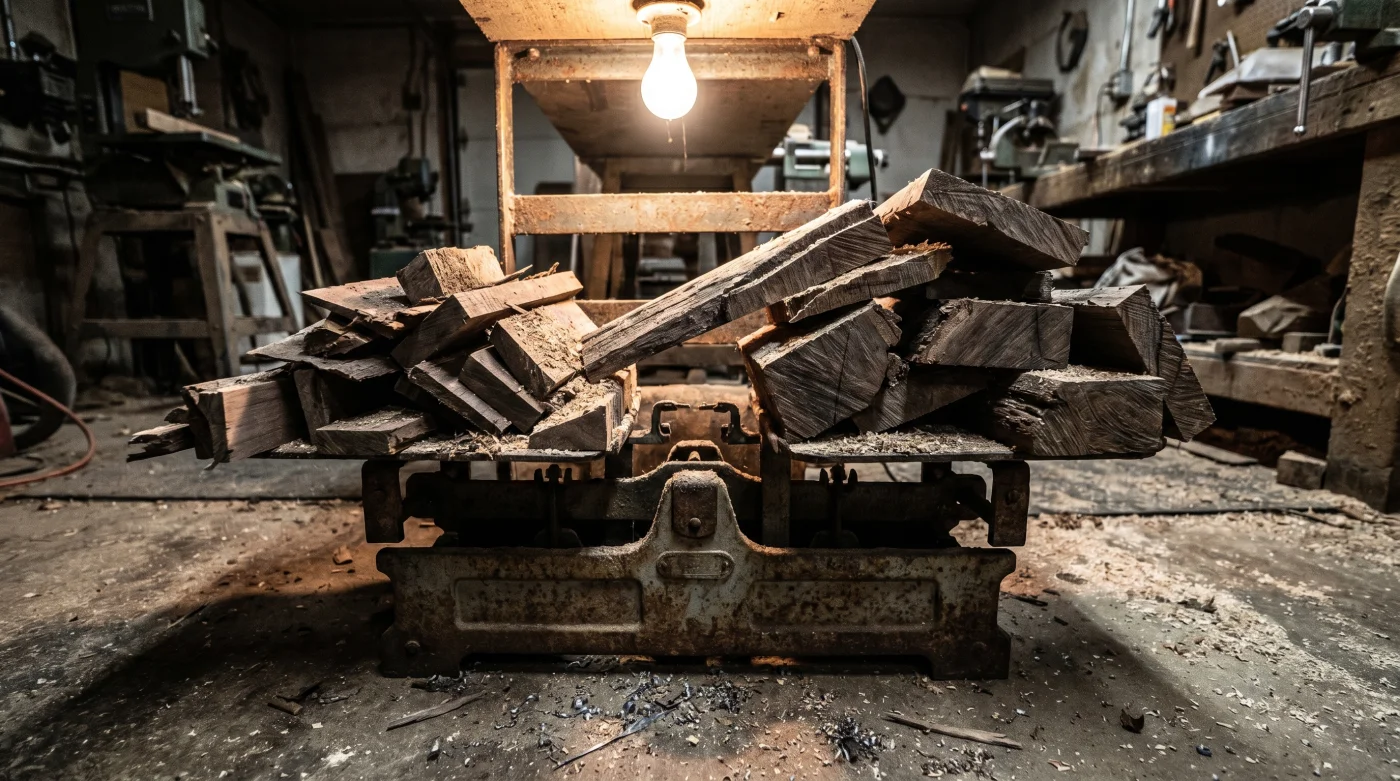
By paying by the pound instead of the traditional board foot, you flip the economic model of the lumber industry completely on its head. You aren’t hunting for pristine, eight-foot-long clear boards; you are rescuing heavy, dense trimmings that the high-speed production schedule simply cannot accommodate. The machine operator cannot stop to process a two-foot chunk of wood, so it goes straight into the discard pile.
Ask Elias Thorne, a 58-year-old custom millwork owner in Grand Rapids, what he does with his scrap bin. Every month, his shop churns through thousands of feet of premium walnut lumber, while the heavy CNC machines scream in the background. Pieces under thirty inches are tossed into a massive rolling hopper. To him, a two-foot block of prime timber is dead weight taking up floor space, but when a local maker pulls a pickup truck around back and pays for the whole barrel with cash, both parties win tremendously.
Adjusting the Harvest
How you approach this shadow market depends entirely on the scale of your personal craft. The discard pile varies wildly depending on what the commercial shop produces, so targeting the right business is crucial to finding the exact materials you need.
For the Small-Batch Maker
If you build end-grain cutting boards, intricate jewelry boxes, or thick floating shelves, you are the ideal candidate for the scrap-bin harvest. You don’t need eight-foot clear boards that cost a fortune. You need dense, interesting grain in manageable chunks, so you should focus on architectural millwork shops hidden away in your local industrial park. These businesses produce custom stair treads and thick historical moldings, meaning their discarded pieces are often incredibly thick, highly figured, and perfectly kiln-dried.
- Historic copper shortage threatens to double home renovation costs this month
- The black tea method replacing expensive hardwood floor refinishing
- Master plumbers never use chemicals to clear a blocked bathroom sink
- The upside-down shelf trick instantly doubles small kitchen storage space
- The winter storage mistake destroying your lawn mower blade before spring
- Plumbers warn this 5-minute basement check prevents catastrophic flooding
- Where contractors secretly buy premium walnut lumber for less than pine
- Renters are using this $2 putty to install floating shelves without drilling
- The single drop of essential oil that restores rusted cast iron in seconds
- Major insurers begin rejecting homes with this specific spray foam insulation
For the Furniture Restorer
Perhaps you repair damaged mid-century dressers or build classic accent chairs in your garage. You need consistency and workable lengths, usually falling comfortably in the two-to-three-foot range. Look for commercial furniture builders or high-end office cabinetry shops that regularly toss out straight-grained rippings. These narrow strips are completely useless for large cabinet panels but are absolutely perfect for turning chair legs, carving custom drawer pulls, or crafting delicate inlay banding.
The Loading Dock Protocol
Walking into a busy production shop during working hours requires a great deal of tact. You are actively interrupting a high-volume manufacturing floor, and your approach must be humble, direct, and incredibly respectful of their time. Do not walk in asking for favors; instead, offer them a highly convenient waste-disposal solution.
Before you make the drive, adopt a mindful routine. Execute these steps with precision to build a lasting, mutually beneficial relationship with the shop foreman who controls access to the hopper.
- Search local directories for custom millwork or architectural cabinet makers, bypassing retail lumberyards completely.
- Call around three in the afternoon on a Thursday, as mornings are focused strictly on getting the daily production moving.
- Bring heavy-duty canvas bags, thick leather work gloves, and exact cash in small denominations to make the transaction frictionless.
- Take everything in the bin without picking through it; be the person who solves their clutter problem entirely in one swoop.
The tactical toolkit for this endeavor is incredibly simple. Expect to pay between fifty cents and a dollar per pound, which means you acquire premium domestic hardwood at a massive fraction of its retail cost. Always use the magic phrase: I am a local hobbyist hoping to buy some of your hardwood drop-offs to keep them out of the commercial dumpster.
The Quiet Satisfaction of Sourcing
There is a distinct, quiet joy in running a sharp hand plane over a piece of dark, oily timber that cost you less than your morning cup of coffee. The deep chocolate ribbons of the grain emerge with every pass, completely detached from the financial burden usually associated with such high-grade lumber.
Working with incredibly expensive wood induces anxiety, but fear of mistakes completely evaporates when the material is salvaged. You experiment far more boldly with your joinery. You cut complex dovetails with a relaxed grip. You stop worrying about wasting a precious financial resource and start focusing entirely on the pure mechanics of the craft in front of you.
You bypass the fragile supply chain panic and the aggressive retail markups, anchoring your work deeply in your local community. The walnut is no longer just a piece of wood purchased off a rack. It is a salvaged treasure, rescued at the last minute from the industrial burn pile, ready to ground your living room with warmth and character for the next century.
The truest measure of a craftsman isn’t what they can build from a flawless board, but the beauty they can coax out of the discarded pieces everyone else left behind.
| Key Point | Detail | Added Value for the Reader |
|---|---|---|
| Sourcing Method | Buying by the pound from commercial cabinetmakers and millwork shops | Immediate access to premium hardwood at a fraction of traditional retail board-foot pricing |
| Target Material | Heavy off-cuts, short knotty lengths, and narrow straight-grain rippings | Perfectly sized, kiln-dried stock for small batch projects, box making, and furniture repair |
| Best Timing | Mid-afternoon on Thursdays, shortly before the end of the shift | Avoids peak production hours, ensuring a much warmer reception from the shop foreman |
FAQ
Is this wood usually kiln-dried and stable?
Yes, professional shops exclusively use properly dried lumber, meaning your finds are incredibly stable and ready for immediate use in your home shop.How do I calculate the board-foot equivalent from a pound price?
A board foot of domestic walnut weighs roughly three pounds. If you pay fifty cents a pound, you are effectively paying a dollar fifty per board foot.Will these commercial shops actually sell to individuals?
Most floor managers are thrilled to offload scraps to local hobbyists, provided you are polite, load quickly, and pay in exact cash.What dimensions and sizes should I expect to find?
You will typically find heavy pieces under three feet in length, often featuring knots, live edges, or minor defects that are easily worked around.Do I need to call ahead before visiting the loading dock?
A brief phone call mid-afternoon shows deep respect for their production schedule and ensures they actually have a scrap bin available for you to haul away.