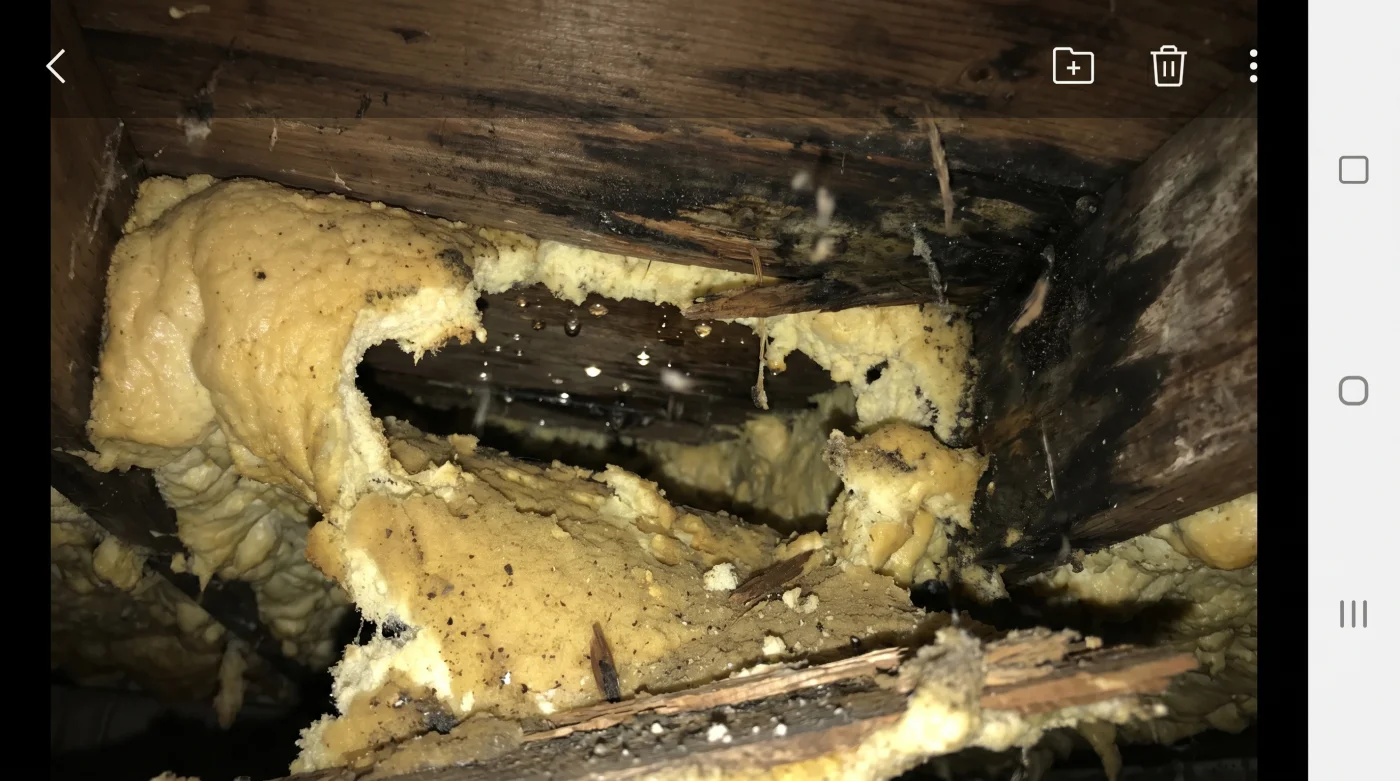
You flick on the heavy metal flashlight, its beam cutting through the dry, static air of your attic. Above you, thick layers of expanding foam cling to the bare rafters like pale, hardened clouds, deadening the sound of the wind outside.
You paid a premium for this exact setup, convinced you were sealing out the harsh winter drafts and locking in the expensive, air-conditioned relief of August. It was supposed to be the ultimate energy upgrade, a badge of modern homeownership that would instantly boost your property value.
But then a letter arrives from your homeowner’s insurance provider, carrying a distinctly cold, corporate tone. It outlines a mandatory upcoming inspection or, worse, a flat-out refusal to renew your policy unless you can definitively prove the structural integrity of your roof deck.
This abrupt policy cancellation isn’t an isolated clerical error; it is a rapid, nationwide shift catching thousands of homeowners completely off guard. The very material designed to save you money is now flagging your property as an unacceptable financial risk to the companies paid to protect it.
The Lungs of Your Home
We often treat a house like a static box, a rigid container that simply holds our belongings and keeps the rain off our heads. In reality, a wood-framed house is a dynamic, breathing system that constantly absorbs and releases seasonal humidity.
Trapping moisture changes everything about how this system survives the changing seasons. When rigid spray foam is applied directly to the underside of a roof deck without proper ventilation channels, it acts like wrapping a runner’s chest in tight plastic wrap—the heat stays in, but the sweat has absolutely nowhere to go.
If a single shingle blows off or a flashing seal around your chimney fails, rainwater naturally seeps into the wood underneath. In a traditional attic, that moisture eventually dries out through natural airflow, leaving a faint water stain as the only real evidence of a passing storm.
With direct-applied spray foam, the moisture is locked tightly against the pine decking with no avenue for evaporation. The wood quietly marinates in the trapped dampness, softening into a dark, crumbly sponge while the rigid foam continues to hold its shape, hiding the rot entirely from plain sight.
Marcus Thorne, a 48-year-old structural timber inspector out of coastal Maine, knows this deception intimately. For a decade, he praised the airtight perfection of modern insulation, right up until the day he leaned his weight against a seemingly flawless, foam-coated attic rafter and felt the entire beam give way like wet cardboard. He realized that while the synthetic barrier was indestructible, it was slowly suffocating the very structure it was meant to insulate, turning small, fixable roof leaks into hidden, catastrophic failures.
Navigating the Coverage Crisis
Underwriters rely on hard data, and after paying out massive claims for entirely collapsed roof structures—damage that went entirely undetected during routine appraisals—they are simply pulling the plug. You must identify your personal risk based on how your home is currently insulated and what your immediate next steps are.
The impact of this industry shift varies wildly depending on your relationship to the property. Understanding your specific position is the only way to protect your financial investment.
- Plumbers warn this 5-minute basement check prevents catastrophic flooding
- Where contractors secretly buy premium walnut lumber for less than pine
- Historic copper shortage threatens to double home renovation costs this month
- The black tea method replacing expensive hardwood floor refinishing
- Master plumbers never use chemicals to clear a blocked bathroom sink
- The upside-down shelf trick instantly doubles small kitchen storage space
- The winter storage mistake destroying your lawn mower blade before spring
- Plumbers warn this 5-minute basement check prevents catastrophic flooding
- Renters are using this $2 putty to install floating shelves without drilling
- The single drop of essential oil that restores rusted cast iron in seconds
For the Recent Upgrader
Do not let panic dictate your first response if you just spent thousands retrofitting your attic spaces. You need to pull your original work orders and verify if the installers left a continuous one-inch air gap between the roof deck and the foam using physical baffles.
Demand your installation records immediately, and check for specific warranties that cover structural moisture retention. If the foam was sprayed directly against the bare wood, you will need an independent inspector to establish a baseline of the wood’s current moisture content before the insurance company sends their own evaluator.
For the Prospective Buyer
Treat it as a liability the moment you walk through a flipped house with freshly sprayed, bright-white foam. It might look like a massive bonus on the real estate listing, promising low heating bills and a beautifully finished, climate-controlled storage space, but it is currently an unverified risk.
Ask the seller for the specific chemical make-up of the foam, distinguishing between breathable open-cell and moisture-trapping closed-cell. If the seller cannot provide documentation of proper ventilation installed behind the foam layer, use that lack of transparency as leverage to reduce the asking price, or simply walk away.
Assessing Your Attic’s Health
Addressing this hidden hazard requires a methodical, highly practical approach. You do not need to tear down your drywall today, but you do need to understand exactly what is happening behind the synthetic barrier above your head.
Gather your diagnostic tools before heading up the pull-down stairs. A basic thermal imaging camera, a dual-probe moisture meter, and a bright headlamp are the only items you need to begin a mindful assessment of your home’s upper limits.
- Scan for temperature anomalies: Wait for a cold evening, turn on your thermal camera, and look for distinct dark blue patches on the foam. These localized cold spots often indicate areas where exterior water is actively seeping in and cooling the material.
- Test the exposed timber: If any structural wood is left exposed at the eaves or the ridge line, press your dual-probe moisture meter deeply into the grain. Any reading sitting above 20 percent is a massive red flag for active, spreading rot.
- Monitor the ambient humidity: Leave a digital hygrometer sitting in the center of the attic space for a full week. If the relative humidity stays pinned above 60 percent even during dry weather, the enclosed space is failing to exchange air properly.
- Consult a non-destructive specialist: If you strongly suspect hidden damage, hire a contractor who focuses on preservation. They can carefully drill tiny, easily patched holes through the foam to accurately measure the moisture of the hidden deck behind it.
Beyond the Premium
We spend tremendous energy attempting to control our environments, enthusiastically buying into the modern promise of absolute energy efficiency. But in our rush to perfectly seal out the elements, we often forget that the natural forces of air and water will always demand an exit strategy.
True shelter requires harmony, not just a heavier, thicker barrier against the prevailing wind. When you understand how the specific materials in your home interact with the fluctuating atmosphere around them, you stop relying blindly on what a sales brochure promises and start caring for the physical, breathing reality of the structure itself.
By addressing this insulation oversight, you are doing far more than temporarily appeasing an anxious insurance adjuster. You are actively protecting the bones of your house, ensuring the timber remains solid, quiet, and deeply capable of standing strong for generations to come.
A building that cannot dry is a building destined to die; we must insulate for warmth, but we must ventilate for survival.
| Key Point | Detail | Added Value for the Reader |
|---|---|---|
| Open-Cell Foam | Spongy, breathable texture that allows moisture vapor to pass through. | Reduces the risk of hidden wood rot by letting the roof deck dry naturally inward. |
| Closed-Cell Foam | Rigid, dense barrier that blocks all air and moisture transmission. | Requires a perfect exterior roof; immediately highlights why insurers fear trapped water. |
| Baffled Installation | Maintains a 1-inch physical air gap between the roof deck and the insulation. | Provides the ultimate peace of mind, blending high efficiency with critical structural airflow. |
Frequently Asked Questions
Will my insurance company notify me before canceling?
Yes, providers typically send a notice 30 to 60 days before your renewal date, often requesting an inspection of the attic space before making a final decision.
Can spray foam be safely removed?
It is difficult and labor-intensive to scrape off rigid closed-cell foam without damaging the wood, which is why prevention and proper initial installation are so vital.
Does this affect foam in basement walls?
Insurers are primarily focused on roof decks because gravity pulls roof leaks directly into the structural timbers, whereas basement concrete handles trapped moisture differently.
Is open-cell foam safe from policy cancellations?
Generally, open-cell is viewed more favorably because it allows water to pass through, making roof leaks visible before catastrophic rot sets in, though policies vary by region.
Should I install a dehumidifier in a sealed attic?
While a dehumidifier controls ambient air moisture, it cannot pull trapped rainwater out from between a layer of closed-cell foam and an exterior pine roof deck.