The last cut of the season always carries a distinct, bittersweet weight. You push the machine over the fading grass, breathing in the familiar scent of crushed chlorophyll and warm exhaust, knowing the yard is going to sleep for the winter. You roll the mower into the dark corner of the shed, pulling the wooden doors shut with a satisfying click.
It feels like you have done exactly what you were supposed to do. The roof does not leak, the floor is dry, and the machine is shielded from the freezing rain and snow. You trust the wooden walls to keep the winter out. But while you are warming up inside the house, something quiet and aggressive is already happening under the steel deck.
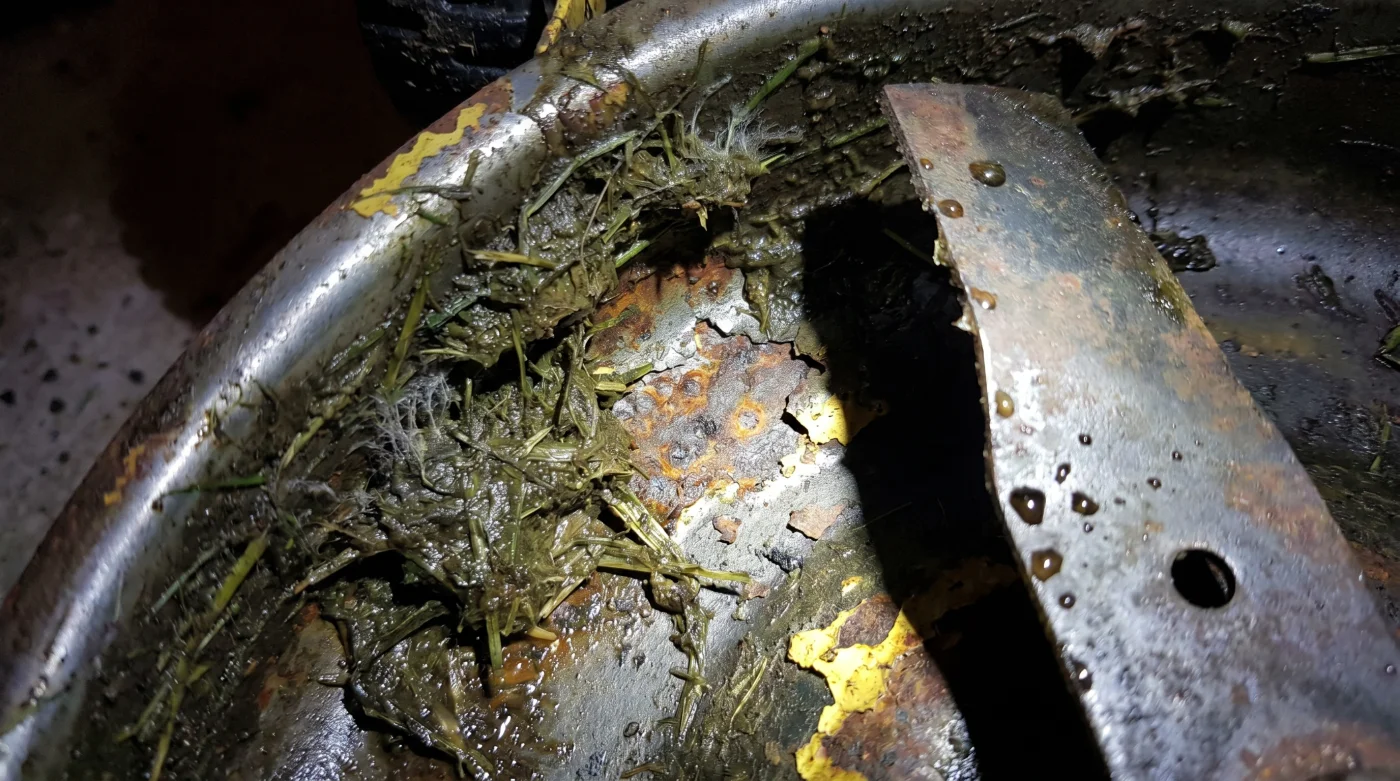
Those clumps of green and brown packed tightly against the blade are not just harmless debris waiting for spring. As they sit in the still, unventilated air of your storage space, they begin to sweat. The moisture trapped inside those organic clusters transforms into a highly acidic poultice, slowly eating away at the hardened steel you rely on.
The Acidic Poultice You Built Yourself
Most of us operate under a fairly logical assumption: if you keep metal out of the rain, it will not rust. We treat our sheds and garages like impenetrable fortresses. But the true threat to your lawn mower blade does not come from the sky. The acidic micro-climate thrives right where you left it, attached to the underside of the deck.
Think of a decaying grass clipping as a tiny, wet sponge. When hundreds of these sponges are mashed together by the force of the spinning blade, they form a dense mat. As this organic matter breaks down over the winter, it releases nitrogen and forms weak acids. This pocket acts like a slow-burning chemical fire directly against the raw edge of your blade, corroding the bevel and pitting the flat steel over a period of months. You aren’t just storing your mower; you are actively composting it.
Arthur Vance, a 68-year-old small-engine mechanic who runs a cramped, oil-scented repair shop outside Columbus, Ohio, calls this phenomenon the February Rot. He can tell exactly what month someone put their mower away just by looking at the pitting pattern on the blade. Arthur insists that a bare blade left in an open field will often fare better than a blade stored in a dry shed covered in a half-inch of caked grass. The metal needs to breathe, while the caked-on grass holds the corrosive moisture directly against the steel, refusing to let it evaporate.
Adjusting for Your Mowing Reality
The severity of this winter storage mistake depends entirely on how you finished your season. The chemical makeup of your lawn debris dictates the intensity of the corrosion. Here is how different habits change the threat level.
For the Mulching Enthusiast: If your machine uses a dedicated mulching blade, it chops grass into microscopic pieces. These fine particles form a paste that acts almost like a plaster cast against the metal. Because it dries hard on the outside, it traps internal moisture completely. You cannot just hose this off; it requires mechanical scraping to break the seal.
- Major insurers begin rejecting homes with this specific spray foam insulation
- Plumbers warn this 5-minute basement check prevents catastrophic flooding
- Where contractors secretly buy premium walnut lumber for less than pine
- Historic copper shortage threatens to double home renovation costs this month
- The black tea method replacing expensive hardwood floor refinishing
- Master plumbers never use chemicals to clear a blocked bathroom sink
- The upside-down shelf trick instantly doubles small kitchen storage space
- The winter storage mistake destroying your lawn mower blade before spring
- Renters are using this $2 putty to install floating shelves without drilling
- The single drop of essential oil that restores rusted cast iron in seconds
For the Late-Season Leaf Chopper: Maybe you use your mower as a makeshift vacuum for fallen oak and maple leaves. While leaves are drier than grass, they are incredibly high in tannins. When those pulverized leaves get slightly damp from ground condensation, they leach tannic acid directly onto the blade. This leaves deep black pitting marks that permanently weaken the structural integrity of the cutting edge.
The Ritual of Preservation
Preventing this degradation is not about buying expensive chemicals or renting heated storage. It requires stepping back and performing a quiet, fifteen-minute ritual at the end of the season. Treat this with mindful respect for the tool that maintains your property.
Disconnect the spark plug wire first. This is non-negotiable. If you are using a battery-powered machine, remove the power cell completely.
Tilt the mower carefully. Always keep the carburetor facing up so oil does not flood the engine. Get down on your knees and look closely at the underside of the deck and the blade assembly.
Here is your tactical toolkit for extending the life of your equipment:
- The Wooden Scraper: Use a wooden paint stir stick or a plastic putty knife to dislodge the caked organic matter. Never use metal, as it will scratch the deck’s protective paint.
- The Wire Brush: Lightly brush the blade edge to remove the lingering green film.
- The Rag and Solvent: Wipe down the blade with a rag lightly dampened with WD-40 or a basic degreaser to pull off the sticky sap.
- The Barrier Coat: Apply exactly three drops of clean 10W-30 motor oil to a rag and rub it across the length of the blade. The metal should just barely gleam, not drip.
Beyond the Metal
There is a specific kind of peace that comes from knowing your equipment is genuinely prepared for the freeze. When you remove the acidic threat from the equation, you aren’t just saving twenty dollars on a replacement blade next spring. You are stepping out of the cycle of disposable tools and preventative neglect.
When the ground thaws and the first green shoots push through the soil, you will not be scrambling to fix a jagged, rusted edge. You will be fully ready. You pull the cord, the engine catches on the first try, and your blade moves through the fresh grass with the clean, effortless precision of a well-kept secret.
A tool properly put to bed is a tool that wakes up eager to work; the rest are just fighting the rust you left them with.
| Storage Habit | The Chemical Reality | Added Value for You |
|---|---|---|
| Storing with Grass Caked On | Traps acidic moisture and nitrogen directly against steel. | Causes pitting, requiring frequent blade replacement and rough cuts. |
| Hosing Off Before Storing | Leaves water in tight crevices to freeze and expand. | Promotes superficial rust if not completely dried before storage. |
| Scraping and Oil Wiping | Removes the organic acid source and seals metal from air. | Triples blade lifespan and guarantees a clean spring cut. |
Frequently Asked Questions
Do I need to take the blade off to clean it? No. While removing it makes sharpening easier, tipping the mower with the carburetor facing up and using a wooden scraper is perfectly adequate for winter prep.
What kind of oil should I wipe on the blade? Any standard motor oil, even left over from your car’s oil change, works perfectly. A light coating of mineral oil or WD-40 is also effective as a moisture barrier.
Does this apply to electric or battery-powered mowers? Absolutely. The blade metallurgy is largely the same. Removing the battery is your crucial first step before reaching under the deck.
Can I just run the mower over pavement to clear the grass? No. This only removes loose debris. The dangerous, acidic paste is packed tightly in the crevices and requires manual scraping.
How long does it take for tannic acid to pit the blade? In a damp, unventilated shed, visible pitting from decaying leaves and grass can begin in as little as four to six weeks.