You know the sound. The metallic scrape of a soup can grinding against a glass jar of marinara, followed by the inevitable, dull thud of an oatmeal canister tipping over in the dark. Your pantry is full, but somehow entirely empty of usable space. You stand there in the dim morning kitchen light, staring at fourteen inches of dead air hovering uselessly above your dried goods, wondering how a space so vast holds so little. The scent of stale paprika and forgotten garlic powder lingers in the trapped air.
The usual instinct is to spend your way out. You grab your phone, squinting at the screen, and fill a digital cart with clear acrylic bins, tiered plastic steps, and spring-loaded drawer dividers. We are conditioned by catalogs and lifestyle feeds to believe that a disorganized kitchen is simply a symptom of not owning enough plastic organizers. We assume the solution to too much stuff is buying more stuff to hold it.
But if you look closely at the bones of your cabinet, the solution is already sitting there, quietly holding your bags of flour and sugar. It is a matter of changing how you perceive the geometry of the space. You do not need more bins; you just need to understand how gravity, friction, and tension interact in small, enclosed environments.
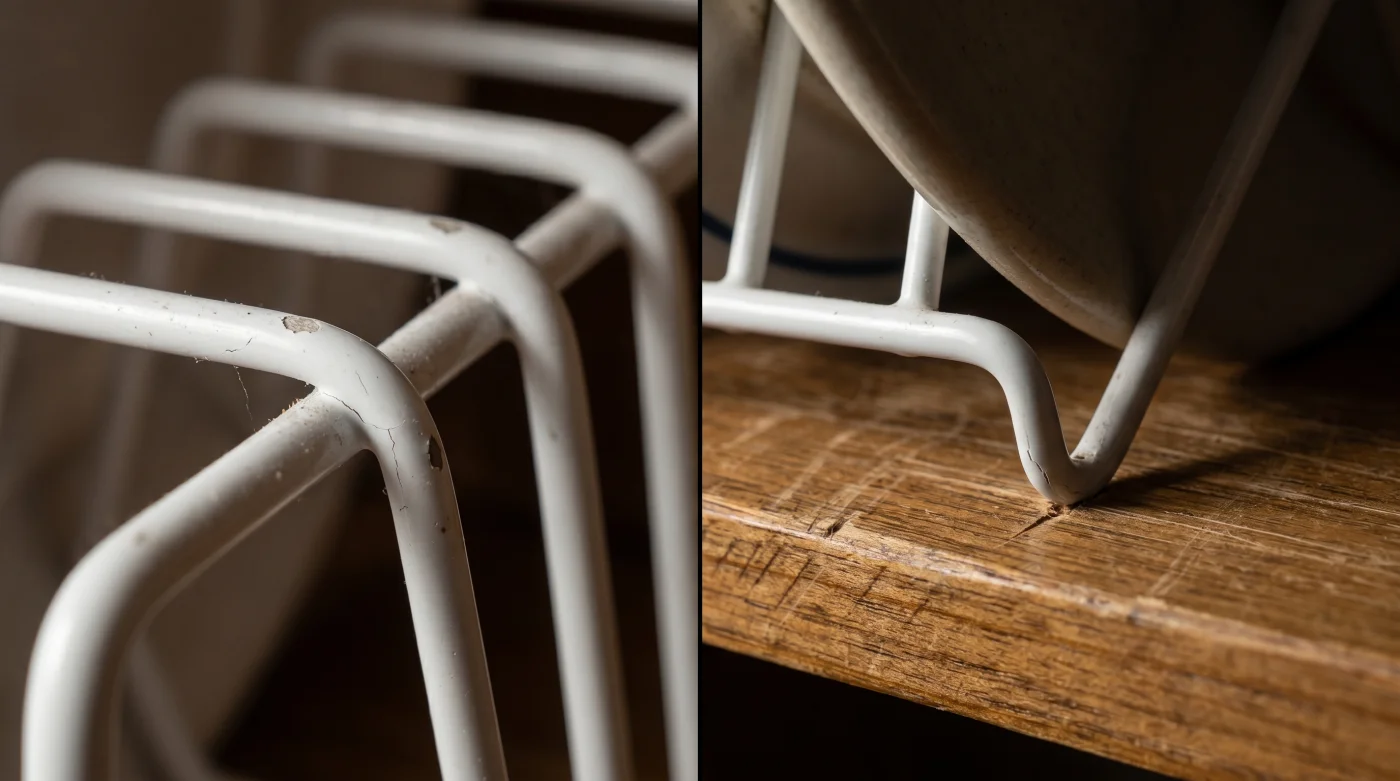
By simply taking a standard wire rack and flipping it completely upside down, you create an immediate secondary tier. The downward lip suddenly becomes a retaining wall, and the structural bars underneath transform into a rigid track system for suspended storage. It completely defies the standard assumption that vertical organizers must be purchased, proving that your environment is already built to serve you.
This tiny adjustment alters the entire dynamic of how you reach for ingredients. Instead of rummaging through a precarious stack of boxes, you interact with a system that holds your food securely in place. It turns a frustrating daily chore into a seamless, tactile motion.
Gravity As Your Clamp, Not Your Enemy
Most standard wire shelves are manufactured with a one-inch lip that points downward, designed purely to hide the raw metal edge. When resting in its standard position, that lip wastes exactly one inch of vertical real estate across the entire span of your pantry, creating a dead zone that serves no structural purpose whatsoever.
When you invert the shelf, you reverse the structural physics of the unit. That useless downward lip suddenly points toward the ceiling, forming a secure railing around the perimeter. More importantly, the flat surface now sits flush against the bottom of the support pegs, turning the underside into a load-bearing grid where you can slide or wedge lightweight items directly into the wire channels.
This is the definition of material and spatial arbitrage. You are taking a mundane detail—the annoying lip of a cheap shelf—and revealing it as a major advantage. It is a functional tray that prevents spills from cascading, and a suspension grid that grips the edges of thin plastic lids.
Silas Vance, a 42-year-old galley outfitter who designs kitchens for commercial fishing boats in Portland, Maine, relies entirely on this inversion trick. On a boat pitching through six-foot Atlantic swells, traditional shelf space is useless if jars slide onto the deck. Vance buys standard off-the-shelf wire racks, flips them upside down, and uses the resulting upward lip to trap heavy canned goods. He then utilizes the exposed bottom grid to suspend lightweight plastic containers using nothing but the natural tension of the wire gaps. It is a masterclass in treating every inch of hardware as a multi-functional tool.
You can apply this exact maritime logic to a stagnant suburban kitchen space. It turns a flat, slippery wire surface into a high-tension storage cradle, securing your rolling items without drilling a single hole, measuring a single bracket, or buying a single screw.
Adjusting for Your Pantry Footprint
Not all pantries behave the same way, and the contents of our cupboards vary wildly depending on how we cook and shop. The way you apply this inversion depends heavily on what you actually store and how your cabinets are physically constructed. The beauty of this method is its total adaptability to different domestic lifestyles.
- The winter storage mistake destroying your lawn mower blade before spring
- Major insurers begin rejecting homes with this specific spray foam insulation
- Plumbers warn this 5-minute basement check prevents catastrophic flooding
- Where contractors secretly buy premium walnut lumber for less than pine
- Historic copper shortage threatens to double home renovation costs this month
- The black tea method replacing expensive hardwood floor refinishing
- Master plumbers never use chemicals to clear a blocked bathroom sink
- The upside-down shelf trick instantly doubles small kitchen storage space
- Renters are using this $2 putty to install floating shelves without drilling
- The single drop of essential oil that restores rusted cast iron in seconds
For the Renter living with pre-installed wire tracks, this is your most forgiving spatial modification. You simply lift the rack off its plastic wall brackets, flip it, and press it back down until it clicks securely into the tracks. The resulting tray perfectly secures rolling items like spice jars, loose onions, or round baking extracts that usually vanish into the dark corners.
For the Bulk Buyer managing heavy stock, the inverted lip acts as a barricade for densely stacked cans. You can safely build a pyramid of crushed tomatoes, bulk beans, or heavy stocks without fearing a sudden avalanche when you open the door in a rush to make a weeknight dinner. The lip takes the lateral pressure, keeping the stack stable.
For the Visual Purist who hates exposed wire racks, simply line the newly created tray with a sheet of heavy cork, stiff canvas, or even rigid cardboard. The lip holds the liner perfectly in place without adhesive, creating a warm, solid surface that stops breadcrumbs and flour dust from raining down onto the shelves below.
For the Baker, this inversion creates a perfect corral for awkwardly shaped items. Bags of chocolate chips, packets of yeast, and slippery bags of powdered sugar can be tossed into the tray without sliding off the edge. The lip acts as a natural boundary, keeping soft packaging contained.
The Mindful Application
Executing this physical change requires less time than brewing a morning coffee. It is a quiet, deliberate act of reclaiming your space, moving away from frantic consumer organizing and toward a grounded, mechanical understanding of your kitchen’s true capacity.
First, empty the shelf entirely, placing your goods on the counter. Wipe down the metal bars with a damp cloth and a drop of dish soap to remove years of invisible, sticky cooking residue. A perfectly clean surface ensures the shelf will seat properly on its pegs once flipped, preventing any wobbling or shifting under heavy loads.
Approach the removal with a gentle, rocking upward motion. Wire shelves are often wedged tightly into their plastic anchors over years of downward pressure. Wiggling the shelf near the anchor points releases the tension without snapping the plastic brackets holding it to the wall.
- Time Required: Exactly 3 to 5 minutes per shelf, depending on how heavily loaded it is.
- The Tools: A rubber mallet (optional, for tapping out stubborn brackets), a damp rag, and a drop of mild soap.
- The Technique: Pull firmly upward near the rear wall anchors to release the original tension. Flip the unit 180 degrees.
- The Placement: Seat the inverted shelf back onto the pegs or into the wall brackets, pressing down firmly until you feel a dull, satisfying thud.
Once seated, test the stability by placing your heaviest glass jar in the dead center. The wire should hum slightly under the weight, but it should not bow or sag. The inverted lip often acts as an improvised truss along the edges, stiffening the entire span of the metal and making it stronger than it was in its original position.
Now, begin loading your items by layering the heaviest goods first. Place large jars against the newly formed back lip, leaving the front edge open for smaller, frequently used ingredients, creating a natural, tiered slope of visual accessibility.
The Quiet Calm of Reclaimed Space
An organized kitchen is rarely the result of a sudden shopping spree or a weekend overhaul fueled by plastic containers. It usually comes from looking at the mundane, invisible objects around you and asking what else they are capable of doing for you. Cooking in a cluttered, hostile space feels like breathing through a pillow; everything requires twice as much effort and yields half the satisfaction.
When you stop fighting the physical layout of your home and start manipulating its existing bones, the daily frustration simply melts away. You are no longer stuffing boxes into a dark, cramped corner, hoping the thin wooden door will hold them back when you walk away.
You have carved a pocket of air out of nothing, using nothing but the resources already bolted to your walls. That small, mechanical victory ripples outward into your daily routine. It makes the simple act of preparing a Tuesday night dinner feel just a little bit lighter, and a lot more intentional.
The spaces we inhabit shape the way we process daily stress. By taking control of the unseen mechanics of your pantry, you are not just organizing cans; you are clearing a path for a more peaceful, functional home life.
"The most valuable space in any room is the air we forget to use. Tension is free; you just have to know how to apply it." – Silas Vance, Marine Galley Outfitter
| Key Point | Detail | Added Value for the Reader |
|---|---|---|
| The Upward Lip | Inverting the shelf creates a 1-inch perimeter fence. | Prevents round objects from falling and stops avalanches of stacked cans. |
| The Under-Grid | The flat wire base now sits flush with the support pegs. | Allows lightweight flat items to be suspended underneath via natural tension. |
| No Drill Installation | Uses the exact same hardware and mounting brackets. | A purely renter-friendly modification that costs absolutely zero dollars. |
Frequently Asked Questions
Will flipping the shelf weaken its weight capacity?
No. The structural integrity remains identical, and in some cases, the inverted lip acts as a rigid truss that prevents center-sagging.Can I do this with solid wooden shelves?
This specific trick relies on the downward lip of standard wire shelving. Flat wooden shelves do not gain a tray lip when flipped, though you can add tension rods to mimic the effect.How do I clean the shelf before flipping it?
A simple wipe down with warm water and a drop of mild dish soap will remove the sticky residue that accumulates from cooking oils in the air.What if my wire shelf is screwed into the wall clips?
You will need a standard Phillips screwdriver to back out the retaining clips. Once flipped, the shelf can often sit securely on the brackets without re-screwing, using its own weight.Does this damage the plastic wall anchors?
As long as you pull upward gently with a rocking motion, the plastic anchors will release the wire without snapping. Avoid yanking forcefully.