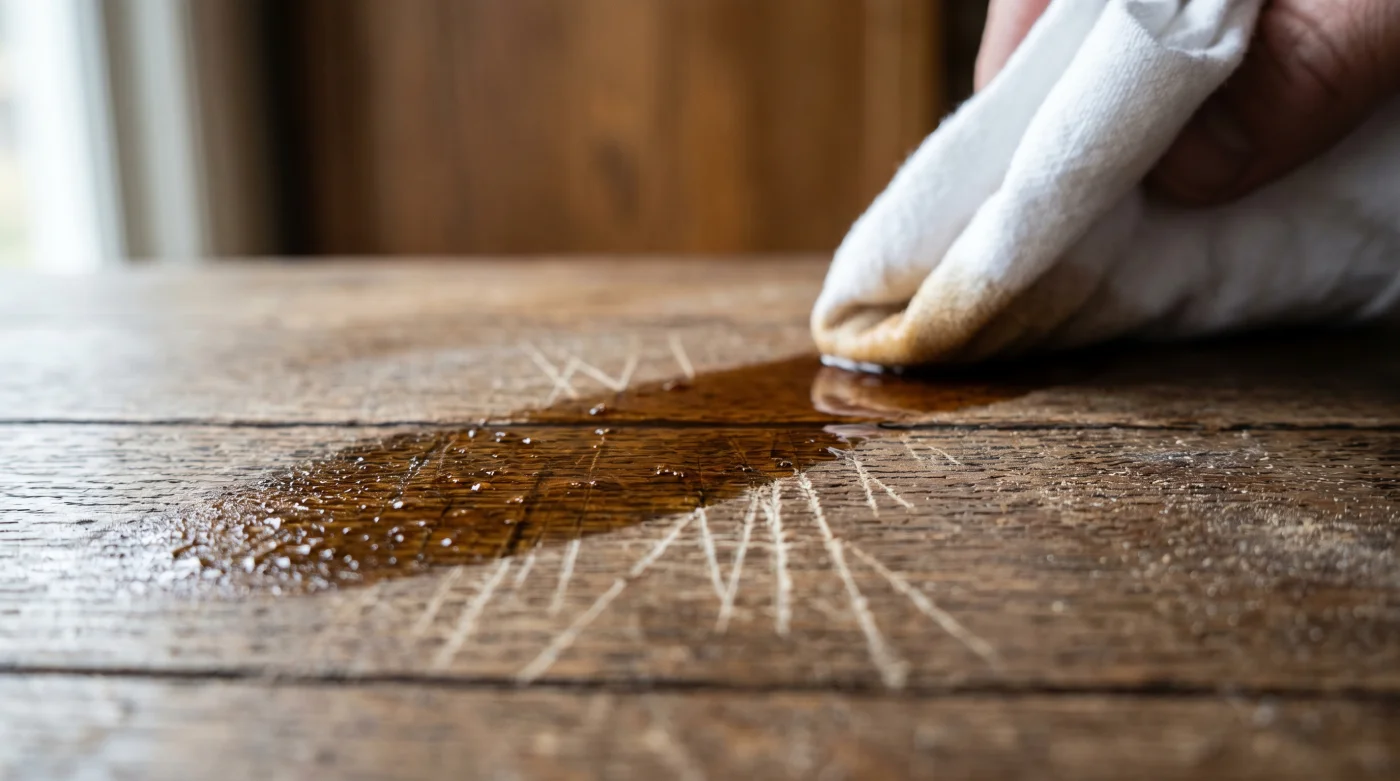
The afternoon sun shifts across the living room, hitting the floor at just the exact, unforgiving angle required to reveal a map of everyday accidents. You see the frantic scatter of dog claws by the front door where the mail carrier always knocks. You notice the dull ghost of a dragged dining chair, and the harsh, white scuffs left behind by a dropped cast-iron skillet or a hundred scattered toys. It is the kind of damage that makes a house feel tired.
The standard reaction to this sight is a heavy sigh followed immediately by grim mental math. You picture drum sanders and chemical fumes, planning for a miserable week of hotel stays and lung-choking dust. The modern home improvement industry has trained you to believe that the only way to fix a damaged surface is to completely obliterate it and start fresh.
But old houses hold quiet, gentler methods built on maintenance rather than destruction. Before the mid-century obsession with encasing every surface in thick, shiny plastic, hardwood floors were not treated like impenetrable suits of armor. They were living, breathing materials, meant to be tended to carefully with oils and natural dyes rather than replaced wholesale.
It turns out the cure for those pale, glaring micro-scratches sits entirely unnoticed in your pantry. By relying on simple, boiling-hot black tea, you can bypass the polyurethane completely. You can restore the visual weight of the finish with nothing more than tap water, a few dried leaves, and a little bit of patience.
The Chemistry of a Quiet Fix
Think of a hardwood floor less like a rigid sheet of glass and more like a dense, fibrous sponge. When a sharp object breaks the sealed surface, it rips into the raw, unstained wood beneath. These exposed, severed fibers reflect light completely differently than the sealed wood, appearing as stark, glaring white lines against the darker, warmer tones of the varnish.
The prevailing myth of floor restoration insists you must erase the entire top layer of the room to fix these tiny imperfections. But you only need to shift the visual contrast. You do not need to build a new surface; you merely need to convince the exposed fibers to match their surroundings. This is where the astringent, binding power of tea comes into play.
Black tea is exceptionally rich in tannins—the exact same naturally occurring polyphenols found deeply embedded in oak, walnut, and mahogany. When applied to a raw, open scratch, these tannins instantly bind to the exposed cellulose of the wood. They darken the fibers permanently from the inside out, tricking the human eye into seeing a perfectly unbroken surface.
Elias Vance, a 68-year-old restoration carpenter working out of Salem, Massachusetts, swears by this exact biological mechanism. Tasked with reviving two-hundred-year-old floorboards in historic colonial homes, Elias refuses to strip away centuries of beautiful character for a few modern scuffs. Instead, he keeps a cheap electric kettle right in his toolbox. “We don’t erase the history,” he says, painting a dark amber liquid into a gouge. “We just soften the scars until they blend in.”
Tailoring the Brew to Your Planks
Wood varies wildly in its thirst, its grain structure, and its native color. You cannot possibly treat a pale, tight-grained maple the same way you would treat a dark, porous mahogany. The tea must be brewed to match the specific environment.
For the golden oak or light pine, you need a delicate, hesitant hand. A single standard tea bag steeped for just three minutes provides a gentle, transparent amber wash. It takes the sharp, bright edge off a fresh scratch without creating a dark, unnatural stain that would draw even more attention to the damage.
For the deep walnut or espresso-stained household, these floors demand absolute intensity. You will want to create a heavy concentrate, boiling three or four bags in barely half a cup of water until the liquid looks almost as thick as black coffee. This heavy tannin load is required to match the deep, moody, saturated tones of the dark wood.
- Master plumbers never use chemicals to clear a blocked bathroom sink
- The upside-down shelf trick instantly doubles small kitchen storage space
- The winter storage mistake destroying your lawn mower blade before spring
- Major insurers begin rejecting homes with this specific spray foam insulation
- Plumbers warn this 5-minute basement check prevents catastrophic flooding
- Where contractors secretly buy premium walnut lumber for less than pine
- Historic copper shortage threatens to double home renovation costs this month
- The black tea method replacing expensive hardwood floor refinishing
- Renters are using this $2 putty to install floating shelves without drilling
- The single drop of essential oil that restores rusted cast iron in seconds
For the modern matte finish, newer engineered floors often show scuffs as broad cloudy patches rather than deep, distinct gouges. Apply your brew incredibly sparingly here, dabbing only the exact line of the scratch. If you let the tea pool, you risk leaving a glossy, discolored halo around the injury that ruins the flat sheen of the modern finish.
The Weekend Alchemist’s Protocol
Executing this subtle repair requires absolute patience rather than brute, mechanical force. You are slowly coaxing the color back into the floor, waiting for the fibers to drink it in, rather than just indiscriminately painting over it.
The Tactical Toolkit is remarkably simple. You need three to five bags of basic tea, skipping any Earl Grey or flavored varieties to ensure pure black tea for tannins. Gather exactly eight ounces of boiling water at roughly 212 Fahrenheit, a handful of tightly spun cotton swabs, and a totally dry, clean microfiber cloth.
The process itself is an exercise in mindful restraint, working with the grain rather than against it.
- Boil the water and steep your tea heavily based on your target floor color.
- Let the brew cool to room temperature completely to protect the surrounding varnish.
- Clean the scratch aggressively with a damp cloth to remove any trapped debris or oil.
- Dip a cotton swab lightly into the tea, applying it strictly inside the raw groove.
- Wait precisely five minutes, dab away the excess moisture, and repeat until matched.
Remember to clean the area thoroughly before you even open the tea. Any residual dirt, dog hair, or floor wax trapped down inside the scratch will act as a physical barrier, entirely preventing the wood from absorbing the natural stain.
Once you are satisfied with the depth of the color, leave the area completely alone. As the residual moisture fully evaporates over the next hour, the tannins will permanently lock into the cellulose structure, rendering the scratch virtually invisible to anyone walking through the room.
Making Peace with the Patina
Mastering this minor, incredibly quiet repair does much more than save you thousands of dollars in professional refinishing costs. It completely changes your everyday relationship with your home.
When you stop viewing every dropped fork or skidding dog as a devastating financial disaster, the ambient stress of the house disappears. You no longer demand that your living space remain statically frozen in an impossible state of sterile, showroom perfection.
The wood beneath your feet is inherently meant to record the life actively lived upon it. By simply softening the loudest, brightest marks rather than erasing them entirely, you allow the floor to age gracefully, turning an accumulation of scratches into a rich, undeniably beautiful patina.
“True restoration isn’t about making things look new; it’s about helping them carry their age with absolute dignity.”
| Key Point | Detail | Added Value for the Reader |
|---|---|---|
| Sanding vs. Staining | Tea targets only the damaged fibers without removing wood | Saves days of hard labor and prevents long-term finish degradation |
| Tannin Binding | Natural polyphenols permanently alter the wood color | Provides a lasting chemical fix rather than a temporary waxy cover-up |
| Brew Concentration | Adjusting the steep time matches the surrounding tones | Allows perfect aesthetic customization for any hardwood type |
Frequently Asked Questions
Will this work on laminate floors?
No, laminate floors are covered in a photographic layer and a plastic wear layer. Tannins require raw, natural wood fibers to bind successfully.
Do I need to seal the scratch afterward?
For minor micro-scratches, the natural oils from daily life are usually enough. For slightly deeper gouges, a tiny dab of natural beeswax can protect the newly stained fibers.
Why can’t I use green or herbal tea?
Green and herbal teas simply lack the high concentration of dark tannins necessary to mimic the natural, moody colors of aged hardwood.
How long does the tea stain actually last?
Because the tannins chemically bind directly to the cellulose in the wood, the color change is effectively permanent and will not wash away with normal mopping.
Can I use this trick on antique wooden furniture?
Absolutely. The core chemistry is identical. Just ensure the scratch has actually penetrated the clear coat to expose the raw, thirsty wood beneath.