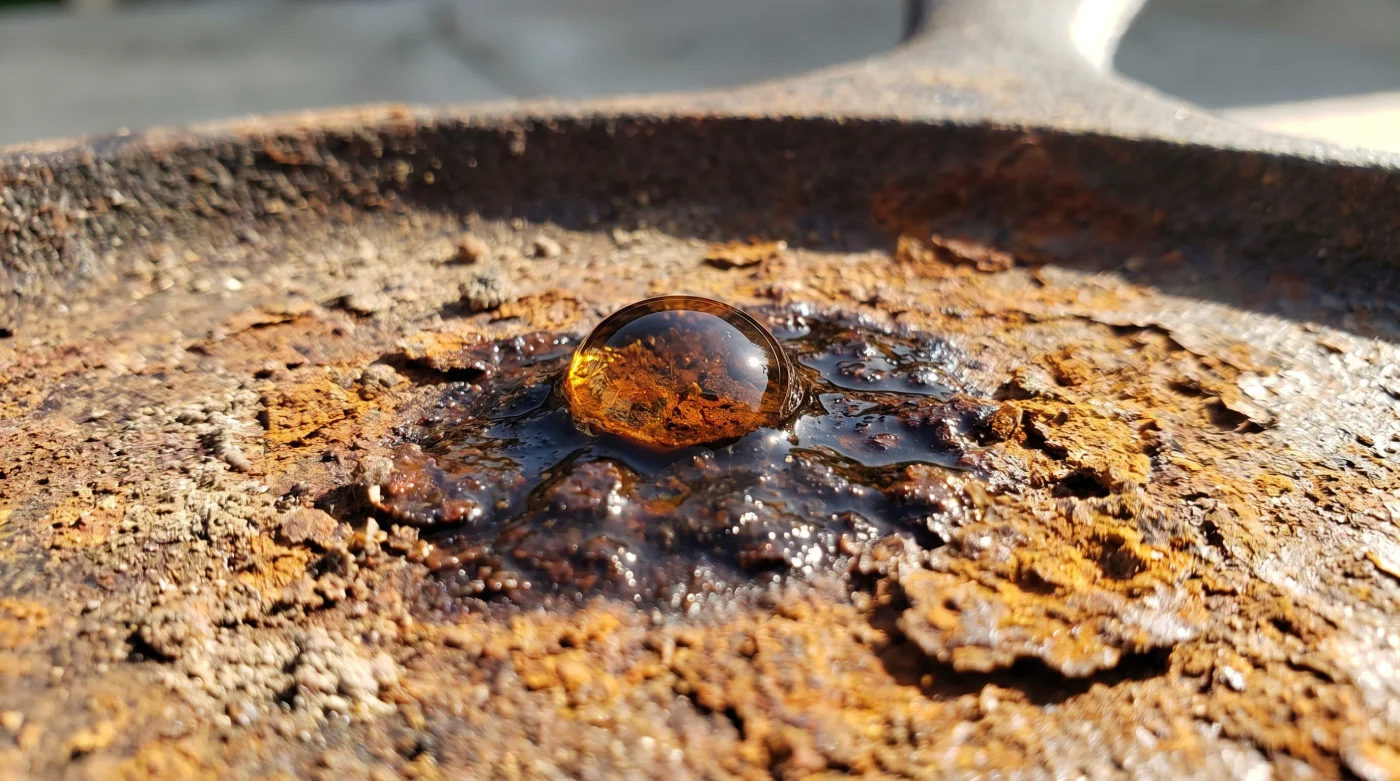
The weight of a vintage cast-iron skillet in your hands feels like holding a piece of family history. But there it sits on your stovetop, marred by a sudden bloom of bright orange rust. You probably stare at it, calculating the hour of punishing labor ahead—the harsh scraping, the stinging fumes of heavy-duty cleaners, the inevitable mess of steel wool fibers scattered across your freshly wiped counter.
Most people reach for abrasives the moment they see oxidation on their cookware. We are taught from a young age that rust is a hostile invader that must be violently eradicated. You brace yourself to scrub until your shoulders ache, believing that sheer physical force is the only language this stubborn, ancient metal understands.
But what if the metal does not need to be fought at all? What if that intimidating layer of orange scale is merely resting on the surface, waiting for the exact chemical key to release its grip? The truth behind reviving heritage cookware is not found in a wire brush or a sander. It actually exists in a tiny amber glass bottle sitting quietly in your pantry.
Rethinking the Chemistry of Rust
You are simply lubricating the tight, invisible fibers so they slip apart on their own. Think of rust not as a solid brick wall fused to your pan, but as a tight, tangled knot of oxygen and iron. When you scrub furiously, you are merely pulling at the frayed ends of that knot, hoping brute force will break it apart. But when you introduce pure, food-grade sweet orange essential oil—specifically, its naturally occurring d-limonene compound—you stop fighting the knot.
This is where the quiet magic of molecular bonds comes into play. You do not need to strip away precious layers of seasoned iron to reach the clean base. A single drop of this highly concentrated, cold-pressed oil penetrates the microscopic pores of the oxidized metal. It creates an immediate, localized reaction that disrupts the tension holding the oxygen to the iron beneath.
The rust literally dissolves itself, turning from a dry, flaky crust into a dark, easily managed liquid. The dreaded, sweat-inducing chore transforms into a quiet, almost effortless chemical ballet. Instead of aggressively scratching the fragile boundary between bare iron and your hard-earned seasoning, you gently coax the damage away.
The Portland Restorer’s Secret
Elias Thorne spent thirty years pulling abandoned cast-iron pans from damp estate sale basements across the Pacific Northwest. At 62, his hands were calloused and battered from decades of operating wire wheels and mixing harsh lye baths. One afternoon, exhausted and dealing with a particularly stubborn 1920s Griswold skillet, Elias accidentally spilled a vial of sweet orange extract his wife used for baking directly onto the rusted cooking surface.
The orange scale wiped away completely cleanly, revealing the smooth, gunmetal gray iron underneath. When he returned an hour later with his heavy-duty scraper, he noticed a dark ring where the oil had pooled. He took a plain white cotton rag and casually wiped it across the surface. Elias realized in that moment he had been working against the metal for three decades when he should have been working with it.
Today, his busy restoration bench features absolutely no power tools. Instead, his workspace is organized around a simple glass eyedropper and a bottle of high-grade citrus oil. He treats each pan not as a construction site to be demolished, but as an artifact to be gently coaxed back to life.
- Major insurers begin rejecting homes with this specific spray foam insulation
- Historic copper shortage threatens to double home renovation costs this month
- The black tea method replacing expensive hardwood floor refinishing
- Master plumbers never use chemicals to clear a blocked bathroom sink
- The upside-down shelf trick instantly doubles small kitchen storage space
- The winter storage mistake destroying your lawn mower blade before spring
- Plumbers warn this 5-minute basement check prevents catastrophic flooding
- Where contractors secretly buy premium walnut lumber for less than pine
- Renters are using this $2 putty to install floating shelves without drilling
- The single drop of essential oil that restores rusted cast iron in seconds
Adapting the Technique to Your Kitchen
Read the surface of the metal to tailor your approach. Not all rust blooms are created equal, and the way you apply this gentle solvent depends entirely on how the pan arrived in its current state. By observing the texture and depth of the oxidation, you can adjust your method to match the exact level of neglect.
For the Thrift Store Hunter
You just brought home a flea-market find that looks like it survived a coastal flood. The rust is thick, textured, and coats the entire cooking surface like sandpaper.
Here, patience beats forced urgency. Warm the pan slightly in the oven—just enough to be comfortable to the touch. The mild heat gently expands the microscopic pores of the iron. Apply three drops of the orange oil directly to the worst spots, spread it thin with a cotton swab, and let it sit overnight. The oil needs several hours to seep beneath that heavy crust and break the deep structural bonds.
For the Distracted Cook
You left your favorite skillet in the sink overnight, and morning brought a shallow, bright orange film across the previously perfect cooking surface. This is flash rust. It is entirely superficial but highly reactive.
Work the oil immediately into the surface with a soft microfiber cloth using slow, circular motions. You only need a single drop for this daily mishap. The oxidation will lift into the fabric within seconds, leaving the seasoned base layer beneath entirely unharmed and ready for immediate use.
The Three-Minute Restoration Protocol
Executing this technique requires stepping back and letting the chemistry do the heavy lifting. Move slowly and watch the reaction happen in real time. It is a satisfying, almost meditative process when done correctly.
- The Warm-Up: Place the skillet on the stove over the lowest possible heat for exactly two minutes. The iron should feel like a warm coffee mug, never hot enough to burn your skin.
- The Application: Turn off the heat completely. Deposit one single drop of pure, cold-pressed sweet orange essential oil onto the center of the rust spot.
- The Activation: Using a clean, dry cotton cloth, massage the oil outward in expanding circles. Apply firm but even pressure—do not scrub or gouge.
- The Lift: Watch as the bright orange rust turns to a dark, muddy sludge. Wipe the residue away completely with a clean section of your cloth.
- The Seal: Immediately rub a dime-sized amount of grapeseed or flaxseed oil over the freshly cleaned area to prevent fresh oxygen from touching the bare iron.
Your tactile toolkit genuinely matters. Keep your tools extremely minimal for this process. A glass dropper ensures you do not over-saturate the pan with concentrated oils, and using pure cotton rags guarantees you will not accidentally scratch the fragile boundary between the bare iron and your existing seasoning.
A Quieter Way to Maintain Your Kitchen
There is a profound relief in discovering that not every physical problem in your home requires aggression to solve. When you realize that stubborn rust can be gently coaxed away with a simple drop of botanical oil, the way you view household maintenance begins to fundamentally shift. You stop seeing your heavy tools and vintage cookware as fragile burdens that demand endless, exhausting upkeep.
You gain absolute peace of mind knowing that even if a mistake happens and moisture is left behind, the remedy is just a pantry cabinet away. The cast-iron pan returns to being a reliable, forgiving partner in your daily cooking rather than a chore waiting to happen.
This gentle, mindful approach preserves the deep history of the iron while actively honoring your own time and physical energy. You preserve the tool, and more importantly, you preserve yourself.
“True restoration isn’t about forcing the metal to your will; it is about providing the exact conditions the material needs to heal itself.”
| Key Point | Detail | Added Value for the Reader |
|---|---|---|
| The Active Ingredient | d-Limonene found in cold-pressed sweet orange essential oil. | Breaks molecular bonds of rust safely without toxic fumes. |
| The Method | Lubrication and gentle wiping instead of abrasive scrubbing. | Saves immense physical effort and protects the pan’s patina. |
| The Prevention | Immediate resealing with grapeseed or flaxseed oil after cleaning. | Creates an airtight barrier that stops flash rust from returning. |
Frequently Asked Questions
Can I use any essential oil for this process?
No. You must use pure, cold-pressed sweet orange or lemon essential oil. These specific citrus oils contain high levels of d-limonene, which is the precise compound required to dissolve oxidation chemically.Is essential oil safe to use on cookware that touches food?
Yes, provided you use a 100% pure, food-grade essential oil without synthetic fragrances or carrier oils. Always wash and properly re-season the pan before cooking your next meal.Will this oil strip away my existing seasoning?
When used sparingly (one to three drops), the oil targets the porous rust without deeply penetrating your polymerized layers of baked-on seasoning. Just remember to wipe it away promptly.What if the rust is deeply pitted into the iron?
For deep pitting, the essential oil will lift the active rust, but it cannot replace missing metal. Apply the oil, let it sit overnight, wipe clean, and begin the process of building up new layers of seasoning to fill the microscopic pits.Do I need to wash the pan with soap after using the oil?
It is highly recommended to give the pan a quick rinse with warm water and a tiny drop of mild dish soap to remove any lingering oxidized sludge, followed immediately by thorough towel-drying and a fresh coat of cooking oil.